Looking after the Churchyards in Marston and Lidlington
Churchyards are much more than gardens. They are burial grounds, and also places of prayer and quiet reflection, recreation, an ancient habitat for rare plants and animals, and in Marston, the setting of the church building
“thank you to everyone who looks after our churchyards,
Revd Andrew Goodman
you make them a beautiful place of peace and reflection for us all”
How can I help?
How do I join the team and Volunteer?
We have a dedicated team of volunteers who mow the grass – why not volunteer? Call Revd Andrew Goodman
Tidy up days
Look out for regular Tidy Up days – join the work party: good company and lunch provided!
What about Conservation?
Find out about looking after churchyards and conservation see: Caring for God’s Acre
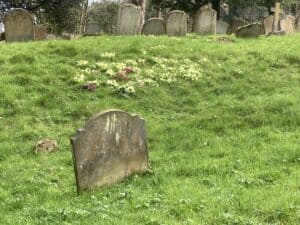
How can I find out about wildflowers and lichens?
Guidance & Regulations
Looking after a grave: FAQ
You can help maintain the churchyards by keeping these few simple rules – avoid the disappointment of having work re-done
Can I use artificial flowers?
Only fresh flowers, in a vase of permitted stone, are allowed to adorn graves – artificial flowers are discouraged.
If you do use them however, they should reflect the season of the year and must/will be removed if they have become dirty, discoloured, or wires pose a hazard to our mower.
Can I plant trees and shrubs?
Only bulbs or annual flowers may be planted – no trees, shrubs or miniature conifers.
Vases and ornaments?
No glass vases, jam jars or ornaments of any kind – they are easily broken and may present a danger to our volunteers maintaining the churchyard and to other visitors.
Plastic vases are discouraged for aesthetic reasons, and they can be hazardous to wildlife too.
Please see “Flower Vases” in the regulations.
Lights and lanterns?
No lights or lanterns, (including solar lights) are allowed and may be removed.
Grave surrounds and chippings?
Grave surrounds and stone chippings are forbidden – not just for aesthetic reasons.
They are dangerous for our volunteers operating lawnmowers and strimmers.
Flowers in the Garden of Remembrance?
Space is limited – you may place one suitable (not glass) container of fresh flowers above or on the memorial plaque. This will help keep the appearance of the Garden neat for everyone – and avoid ‘crowding’ other spaces.
Please note that dead flowers and discoloured or unseasonal artificial flowers may be removed. Thank you so much for caring for your grave and for the Garden of Remembrance too.
What about Memorials and the Churchyard Regulations?
To help keep our churchyards beautiful, respectful and orderly, please read the Guidance on Memorials and Burials and the Regulations – they are to ensure dignity and respect for the departed and they try to be fair to everyone.
When arranging for family members to be interred in the churchyard, bereaved relatives are agreeing to abide by the Diocesan regulations.
The regulations describe the types of memorial which are permitted and the materials which may be used.
A simple wooden cross marks a grave at the time of interment, and a small mound of earth will usually be left.
After about a year the grave should be levelled, and at that time you can apply to the Vicar for a memorial. The application form is usually completed by the Funeral Director.